What is trauma?
Sometimes difficult experiences can be described as trauma. Trauma is when we experience very
stressful, frightening or distressing situations that are difficult to cope with or out of our control. It could be
one incident, or an ongoing event that happens over a long period of time.
TRAUMA CAN MAKE US FEEL:
- Frightened
- Under threat
- Humiliated
- Rejected
- Abandoned
- Unsafe
- Invalidated (for example your feelings or views have been dismissed or denied)
- Unsupported
- Trapped
- Powerless
- Ashamed
Ways trauma can happen include:
- One-off or ongoing events
- Being directly harmed or neglected
- Witnessing harm to someone else
- Living in a traumatic atmosphere
- Being affected by trauma in a family or community, including trauma that has happened before you were born
How our bodies respond to danger
When we feel stressed or threatened, our bodies release hormones called cortisol and adrenaline. This is the
body’s way of preparing to respond to danger, and we have no control over it.
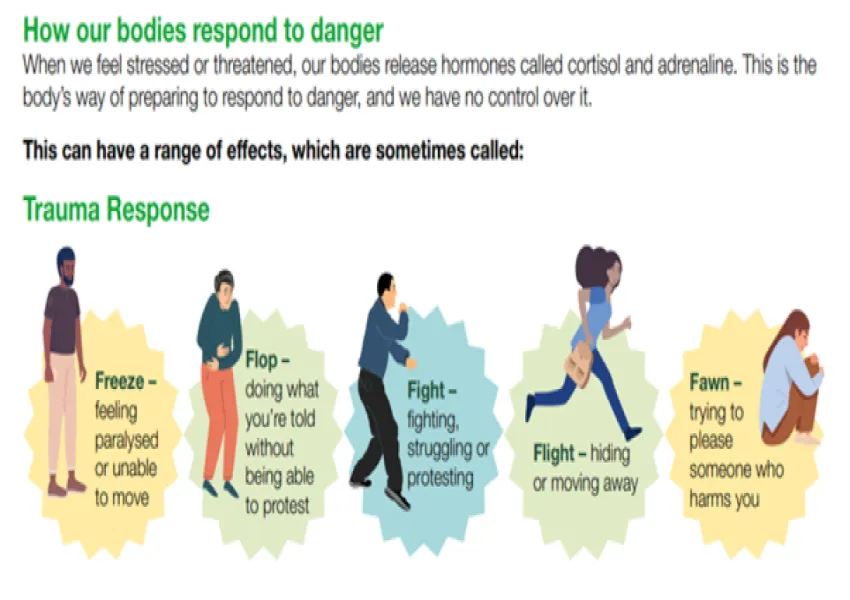
This can have a range of effects, which are sometimes called:
Trauma Response
Freeze –
feeling paralysed or unable to move
Flop –
doing what you’re told without being able to protest
Fight –
fighting, struggling or protesting
Flight –
hiding or moving away
Fawn –
trying to please someone who harms you
If we experience trauma, our body’s reactions can continue long after the trauma is over, for example – when
we’re in a situation that reminds us of the trauma. This might affect how we think, feel and behave, especially
if recovering from the trauma has been difficult.
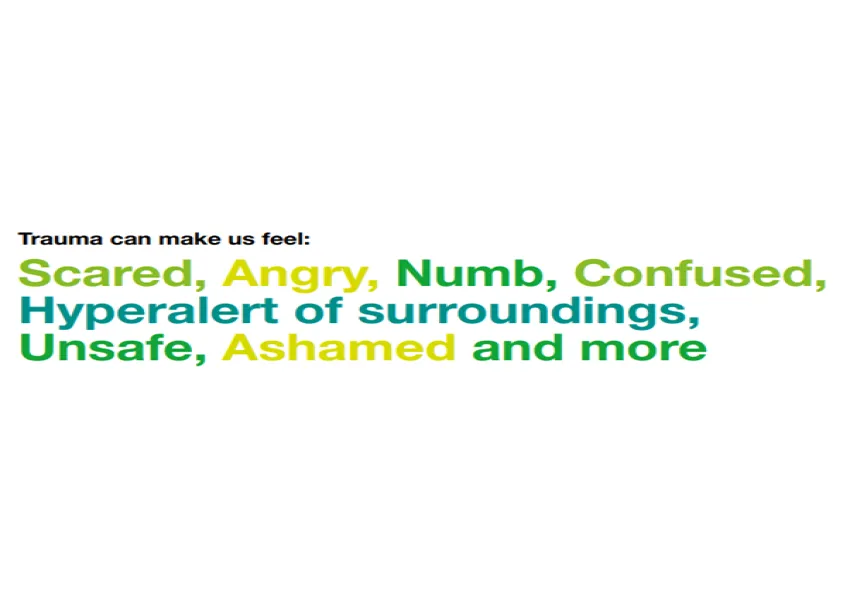
Trauma can make us feel:
- Scared
- Angry
- Numb
- Confused
- Hyperalert of surroundings
- Unsafe
- Ashamed
- and more
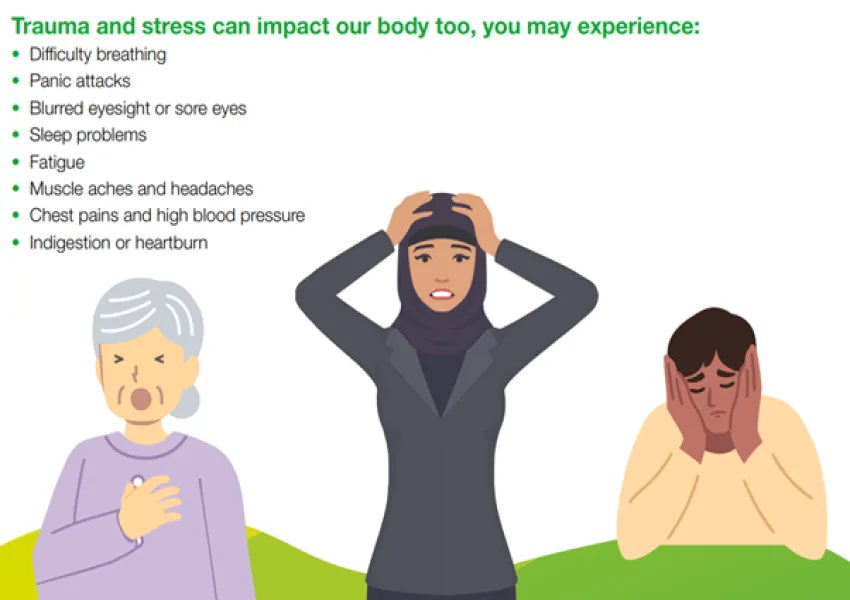
Trauma and stress can impact our body too, you may experience:
- Difficulty breathing
- Panic attacks
- Blurred eyesight or sore eyes
- Sleep problems
- Fatigue
- Muscle aches and headaches
- Chest pains and high blood pressure
- Indigestion or heartburn